Virgin Islands Ski Accessibility Improvements
Responsive Upgrades
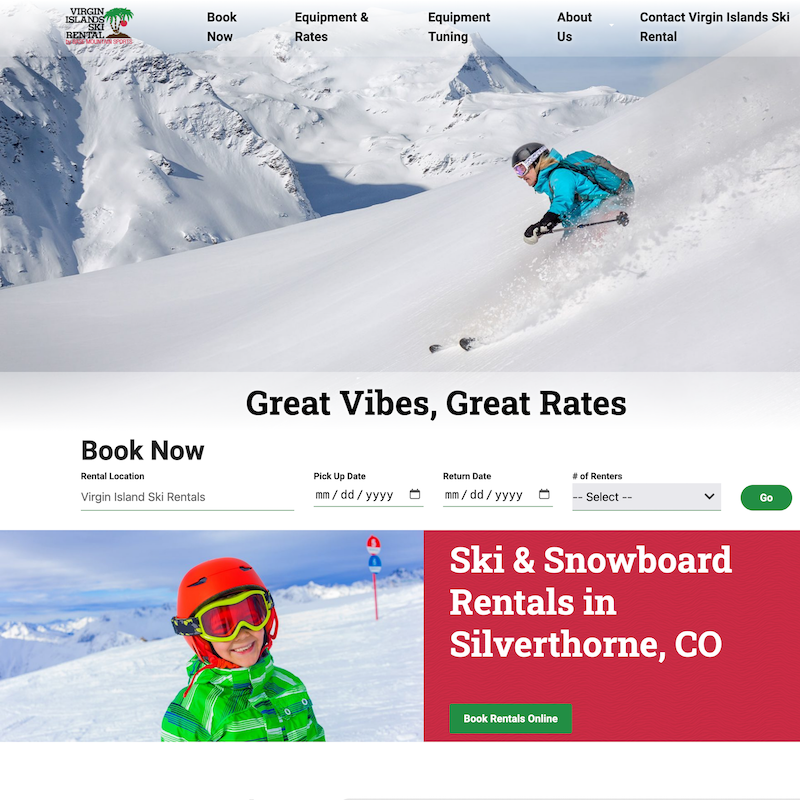
Smooth Slopes, Smooth UX: Making Rentals Easy on Every Screen
The Challenge
My primary objective when taking on this work was to remediate sitewide accessibility concerns to align them with WCAG 2.1 standards.
This client wanted a better digital experience for all users, particularly those on mobile devices and those using assistive technologies. Navigation and forms weren’t fully optimized for keyboards or touchscreens, while contrast and markup issues created friction for visitors with visual impairments. It was time for a comprehensive accessibility audit and responsive design update.
My Solution
I focused on creating a more inclusive, device-friendly experience by reviewing the source code and implementing best-practice design improvements:
- Semantic HTML: Cleaned up form markup and applied correct input types and associated labels for improved screen reader usability.
- ARIA & Alt Attributes: Ensured visual elements and interactive areas were accessible with ARIA roles and alt text where needed.
- Keyboard Navigation: Enhanced focus styles and fixed tab order to support smooth keyboard access throughout the site.
- Responsive Design Fixes: Adjusted layout, spacing, and touch targets for seamless use on mobile phones and tablets.
- Contrast Consultation: Provided guidance on improving color contrast to meet WCAG standards for readability.
Results & Impact
- Increased Accessibility: Screen readers, keyboard navigation, and other assistive technologies now function as expected.
- Mobile Optimization: Responsive layouts reduce visitor frustration and bounce rates.
- Improved Form Interaction: Users can easily navigate, complete, and submit rental forms from any device or input method.
- Compliance & Inclusivity: The updates make the website more inclusive and closer to WCAG accessibility compliance.
Key Takeaways
- Accessibility improvements benefit all users, inviting more people to interact with an application and become willing customers.
- Small changes in HTML structure—like labels and ARIA attributes—make immediately noticeable and positive differences in usability.
- Consistent focus handling and improved contrast are essential to a frictionless UX.
- It's easier to build applications with a mind toward inclusivity and accessibility at the start of the design process rather than retrofitting them after the fact.
← return to case studies